-
Multigenerational Exposure to Mancozeb Impacts Fitness Traits and Population Dynamics in Ceriodaphnia cornuta (Crustacea: Cladocera)
–Banaja Prakashini Samantaray, Ram Kumar in Environmental Toxicology The seepage of agrochemicals into rivers, lakes, and groundwater is a growing concern for freshwater ecosystems. Among them, Mancozeb, a widely used fungicide, breaks down into Ethylene thiourea (ETU)—a metabolite that is more persistent and often more toxic. This raises serious questions about…
-
Answer from the Neighborhood: Sustainable Treatment of Textile Industry Effluent Using Native Biopurifiers from Industrial Discharge Vicinity
in ACS ES&T Water This research explores how native microbial and algal biopurifiers, collected from areas surrounding textile industry discharge sites, can be harnessed to sustainably treat effluents. Key Insights: Textile effluents are rich in dyes, heavy metals, and organic pollutants that pose serious ecological risks. Native biopurifiers—microbes and algae…
-
Microplastic contamination worsens the ecotoxicity of chlorpyrifos to cladoceran Ceriodaphnia cornuta (Sars, 1885) and Echinisca triserialis (Brady, 1886)
in Ecotoxicology This research highlights how microplastics intensify the toxic effects of chlorpyrifos, a widely used organophosphate pesticide, on two key aquatic invertebrates: Ceriodaphnia cornuta and Echinisca triserialis. These results underscore the dual threat of chemical pollutants and plastic debris in aquatic ecosystems. The study provides evidence that microplastic–pesticide interactions…
-
Sewage to energy: harnessing algae-fungi consortium for bioremediation: in Energy Ecology and Environment
In this study, we tackle the pressing issue of wastewater treatment amid rising urbanization and chemical pollution. The study finds that consortium systems, especially those combining algae and fungi, are more effective than monocultures in treating wastewater. This research, conducted under ambient environmental conditions, evaluates the performance of microalgae, bacteria,…
-
Effect of alternative natural diet on microplastic ingestion, functional responses and trophic transfer in a tri-trophic coastal pelagic food web
To understand how foraging behavior and trophic interactions determine the fate of microplastics. We estimated functional response, direct ingestion, bioaccumulation, and subsequent channeling of MP through the food web to elucidate the ecological risk of MP contamination in the marine ecosystem. For more details follow the link below: https://www.sciencedirect.com/science/article/abs/pii/S0048969724051490
-
Sustainable Management of Floral Waste to Reduce Environmental Pollution by Conversion to Value-Added Products and Their Applications in the Synthesizing of Nanomaterials: a Review
Vishal Kumar Gupta, Ram Kumar, Raunak Dhanker, Shashank S. Kamble & Heba I. Mohamed
-
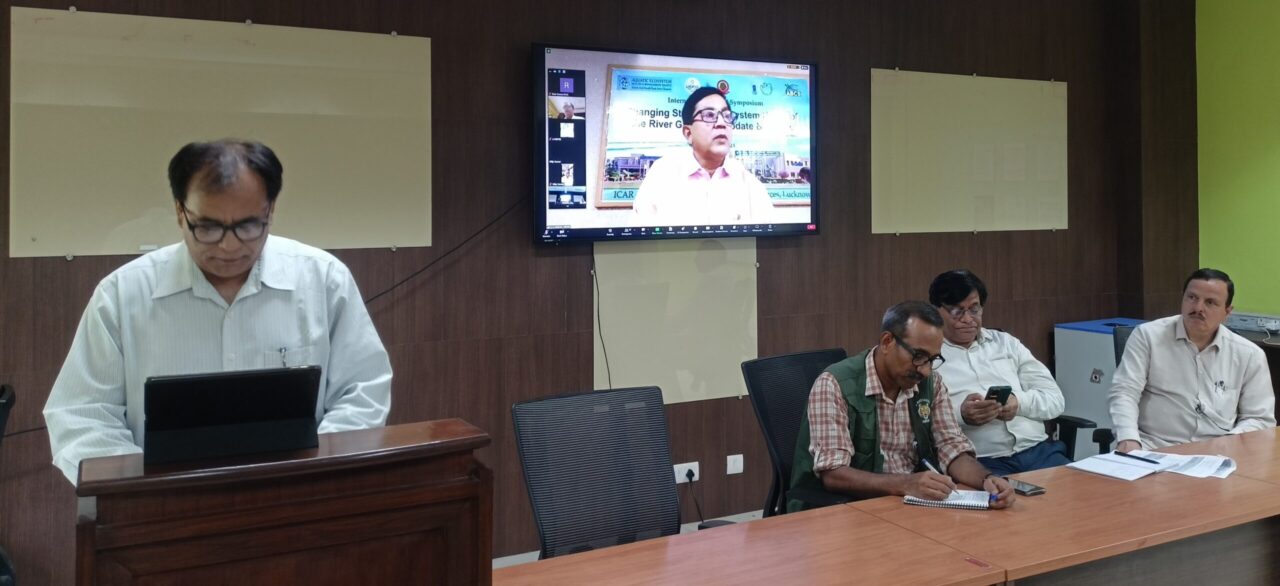
International Symposium on Changing Status of Ecosystem Health of the River Ganga
11th June 2024, Gaya International Hybrid Symposium on Changing Status of Ecosystem Health of the River Ganga: An Update and Review” was organized by the Aquatic Ecosystem Health and Management Society, South and South East Asia Chapter, in collaboration with Central University of South Bihar, ICAR-National Bureau of Fish Genetic…